- always looking for win-win opportunities

Category: Invest Page 3 of 4

Accelerating startups from Eastern Europe to NYC

Two years ago I was in Moscow for a week attending GEC 2014 at the same time as Putin, and a group of senior followers was celebration the takeover of Crimea at the square outside Kremlin. After many trips to Russia over many years, I could feel that there was a dramatic change in the air, and the rest is history. When I the stumbled over Starta Accelerator on LinkedIn it created an interest and an urge to learn more. Many of my investor’s friends and entrepreneurs in Russia have been escaping the country the last years.

Starta Accelerator (www.StartaAccelerator.com) was initiated by Starta Capital VC fund and its founder Alexey Girin. Starta Capital is one of the leading VC funds in Russia. It has received prestigious awards granted by Russian Venture Capital Association, National Venture Industry Award, and National Association of Business Angels award, so they have a quite a reputation to bring to the table.
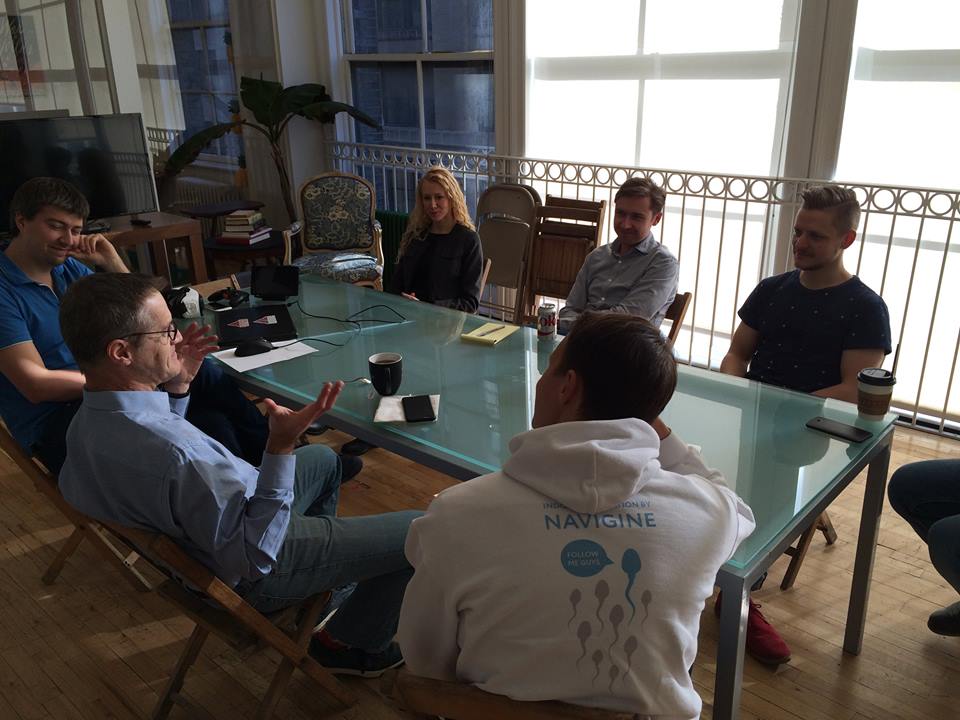
mentor sessions_Starta Accelerator

The Accelerator’s main mission is to introduce startups with East European R&D roots to best practices, trusted advisers and mentors, and overcome cultural differences through a customized educational program that help startups to gain traction in U.S. and become part of the local startup and investing ecosystem.

I have been a coach for several companies from Russia through Seed Forum International and have observed that there can be serious cultural challenges involved. Just to be clear, it is the same challenge for us heading eastbound and maybe even harder.

My chat with Ekaterina (Katya) Dorozhkina;

bio-picKatya is the Managing Partner at Starta Capital & Accelerator. The author of Zero Budget Marketing and Making ArtWork, A ROI-Based Marketing Guide for Entrepreneurs and Startups. Co-founder of @DenArtStudio.With over ten years of experience in the field, she has been on both sides of the brief, helping large corporations and small start-ups with marketing, business and product management. Past clients include Samsung, Casio, American Express, American Airlines, and others.

Katya received her Master’s in International Economics and currently finishing up her Ph.D. She lives in NYC, where she spoils her adopted dog, Bucks and her goldfish, Cash. Katya donates all of the income from her books to a charity fund called Change One Life, which helps connect orphans with families.

I have a strong hypothesis that the entrepreneurial environment in Russia is a little bit difficult right now. Are there many Russian entrepreneurs fleeing the country?

-Indeed, the economic situation has recently declined dramatically. The market liquidity along with the prospect for the future is questionable for many startups and entrepreneurs in general. This pushes entrepreneurs to get out of their comfort zone. They are forced to consider new strategies for their businesses, or they try to move towards more attractive markets that can provide a better future for their businesses and products.

I imagine cultural barriers are an important consideration for these entrepreneurs. What are the main challenges?

-As with any cross-cultural exchange, it takes a time to get used to the new cultural rules. For businesses, cultural differences can present an obstacle to developing and growing business. The challenge that we face at Starta Accelerator is to help Eastern-European founders adapt to a U.S.-oriented mindset within a short time. In general, it takes years to adjust culturally to a new place, but adapting to U.S.-business culture is our focus for the first month of the program.

-One of the main cultural differences between U.S. and Eastern European founders is how the path to success is imagined. European founders are more careful and cautious. They still live in the “waterfall product development” process—they’ve been taught to create the product first, then sell it. However, in the U.S., startups are all about being lean and agile. U.S. founders market and test ideas first, and then create products and raise money. In both scenarios, making mistakes is unavoidable, but it should not prevent you from trying.

There are many accelerators in NYC. What make your initiative unique?

-For startups, our business model is narrowed down to the particular challenge of Eastern-European companies entering the U.S. market. There simply is no other accelerator with this focus. The accelerators in NYC do a fabulous job, but they are only accessible to local startups or companies with sufficient local experience. These startups already participate in the U.S. startup ecosystem, and they are familiar with the local rules. Other accelerators just cannot predict or assist with the challenges facing Eastern-European companies that are trying to join the U.S. startup ecosystem.

-Our one-on-one coaching program also sets us apart from other accelerators. In addition to mentoring by industry leaders, our founders receive individual coaching on Business Communications, Marketing, Business Development & Sales, Product & UX, and Investment Relationship.

-We also provide more value to investors as we select more mature startups with MVP, traction and powerful R&D teams that operate from Eastern Europe usually at a much lower cost than in U.S.

You have a demo day coming up. What kind of startups will we meet?

-At our demo day, you will meet startups from various industries in multiple stages of growth. As I mentioned, we have companies with proven traction in Europe. Some have already raised sufficient money, and some are in the early stages of looking for seed and pre-seed funding. These companies span various tech products and services—from deep techs like VR or navigation technologies to fintech apps and much more. You will have to check it out to see them all!

-Our Demo Day is planned for April 27th  at Microsoft on Times Square. We are happy to invite more Angel and VC investors. 

Working closely with startups on a daily basis can be a challenge. Where do you get the energy?

-Good question. Sex, drugs and rock-n-roll?

-Joking aside, I just love what I do—and in a way, my passion for startups is a kind of drug. Working with startups comes with a whole slew of emotions—from frustration to excitement—but ultimately it is rewarding. Seeing the determination and hard work of these startup founders is inspiring. It keeps me going and makes me do my best to help these guys succeed.

-Plus, I get some kind of peer-to-peer auto-recharge. Our accelerator is like a solar panel, when our group of energetic, smart and determined founders work side-by-side on a daily basis, they give each other—and me—a special natural energy and support. They are not competing against each other. Rather, they are all united by the same goal, and that lifts everybody up.

Where do you see yourself in three years? What are your personal goals for Starta?

-My personal goal is to create a new form of accelerators that will create a new player in the market or change the VC/Startup world completely.

-Right now, it looks like a zoo: unicorns, cash cows, “foxes” and “hedgehogs.” (A study from Columbia University placed VCs and angel investors into two categories, “foxes” and “hedgehogs.”)

-Instead of breeding a new animal, I would like to create a feeder for all. Or, better yet, convert the zoo into an amusement park with positive experiences for each of the players, not just a rollercoaster for startups.

-My professional goal is to finish fundraising for Starta Accelerator Fund for the upcoming four classes over the next two years, which will help to support about eight startups per class and increase the chance of creating an Eastern-European unicorn success story.

More info on the companies presenting and registration for the Starta Demo day at https://www.eventbrite.com/e/starta-accelerator-demo-day-tickets-22171956920
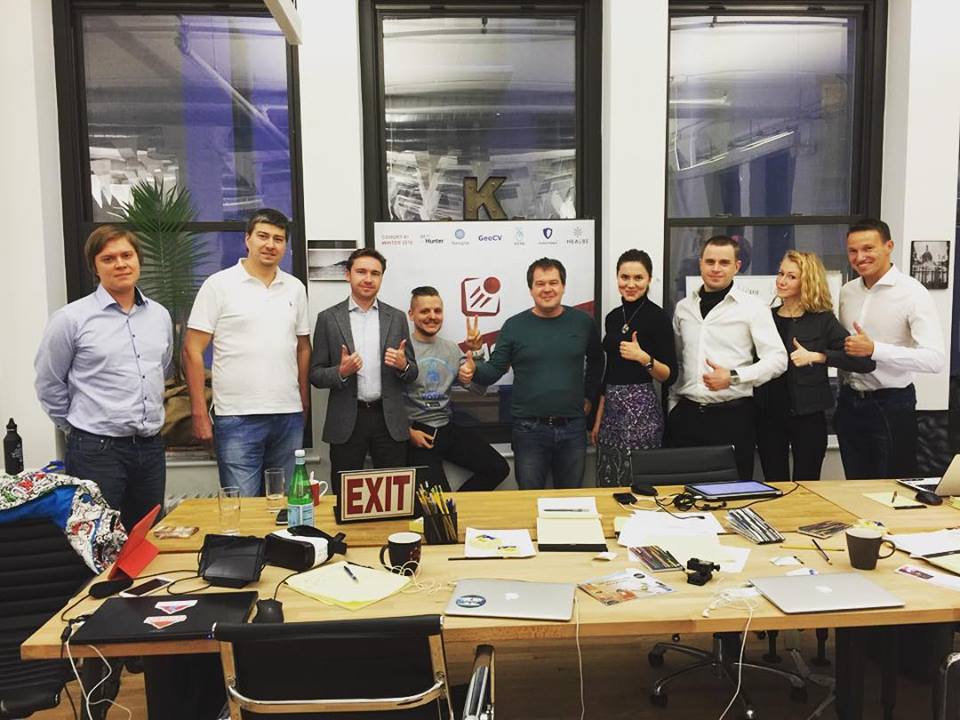
starta accelerator_winter 2016 cohort

Some of the entrepreneurs we will meet at Demo Day. I like the exit sign:)

By Berg Moe. You can reach me at LinkedIn, or simply sign up for my personal newsletter and the Angel Investor Startup Digest.

New majority owner in Phonero AS

Norvestor VI, L.P., a fund managed by Norvestor Equity AS, have bought 56 percent of the shares in Phonero AS. The company has grown to be Norway’s next biggest telecom operator in the business market, with telecom solutions SMEs and large enterprises. The company is projected to have revenues of more than 1 billion NOK in 2015.

mobile_banner12phonero

Are Norwegians fat, lazy and beautiful?

This talk I gave at a local TEDx event, in Bergen produced independently of the TED Conferences. I am talking about the present and future of entrepreneurship in Norway and try to examine the challenges of Norwegian startup companies on the entrepreneurial scene. Why is it so hard for startups to survive and grow is such a rich and prosperous Scandinavian country?

I am working on refining this lecture and on a book focusing on challenges Norway have ahead, so all feedback and comments are of high value for me.

260 Events In 202 Cities; Startups Raised $30M+

A post by Robin Wauters at TechCrunch

Startup Weekend, whose mission is to kickstart and foster startup communities worldwide through events and networking sessions, had a very lively 2011.

According to internal statistics shared exclusively with TechCrunch, the organization held a total of 260 events in 202 cities, in 67 countries (you can find the obligatory accompanying infographic below).

All in all, the ‘startup weekends’ attracted some 21,316 people, who collectively formed 2,817 teams.

Startups that were incubated at its events raised at least $30 million in outside funding in the course of last year, although Startup Weekend CMO Joey Pomerenke tells me there were probably more fundraising rounds completed that they simply don’t know about yet. Read more…

Investor Events January 2012

Seed Forum International Foundation is a not-for-profit foundation working out of London, and it is the international collaboration entity for the national Seed Forum not-for-profit foundations in various countries.
VikingAngels.com uses these events as physical meeting spots for our network.

Events in January: Singapore 17th, Shanghai 19th and Malmø 24th. Contact manager if you want to be invited to one of these events.

Software Ideas Cannot Be Copyrighted, Says EU Court Adviser

As posted by Eddie Ringle at LOCKERGNOME.

An EU court adviser said on Tuesday that copyright protection cannot be claimed on software functions. The implications of this statement are huge, especially considering the fierce parent wars currently consuming the mobile world. Reuters reports:

The non-binding opinion by Yves Bot, an advocate-general at the Luxembourg-based EU Court of Justice (ECJ), is in line with a verdict reached by the High Court of England and Wales in July last year. ECJ judges will rule on the case next year. SAS Institute took legal action against World Programing Ltd (WPL) in 2009, saying the British software company had infringed its copyrights by copying its programs and manuals — even though WPL had designed its products without access to SAS’s source code.

In my personal opinion, the decision this adviser made should be heavily considered by not just EU judges, but US judges as well. Why is that, you ask? Companies like Apple are patenting things left and right without having really invented anything. I can see someone patenting a new physical mechanism on a device, but to patent software ideas is just silly, as they’re usually obvious aspects of a software program. In addition, software patents essentially disrupt the innovation that keeps software from evolving into its next useful iteration.

Read the rest of this story posted by Eddie Ringle at LOCKERGNOME.

Preline Fish Farming – industry revolution?

This company has signed a contract with Lerøy Vest to build a “Extended Smolt Farm”. The Preline Fish Farming patented technology solves all the known problems in this industry and promise no lice, reduced feed cost, higher growth rate, more muscle, reduced fat rate, reduced mortality and increased capital turnover. We think they can be a game changer in an industry with high growth potential if the environmental issues are solved.

Lerøy Seafood Group is the leading exporter of seafood from Norway. The Group’s core activities are distribution, sale and marketing of seafood, processing of seafood, production of salmon, trout and other species, as well as product development. Operating revenues in 2010 was 1,5 billion USD.

For more information, log in/register here or contact manager.

Startup Weekend company raised $750K

ReportGrid, a recent graduate form the 2011 TechStars Boulder class has just raised a seed round in the amount of $750,000. The company, a data analytics as a service offering, is notable for powering its API for analytics and reporting through a cloud-scalable database and visualization engine.

Principal investors in the round included Launch Capital, David Cohen, Walt Winshall, Doug Derwin, and Ed Roman. Read more…

[youtube=http://youtu.be/7ymvKiAKgzU]

Startup Weekends are weekend-long, hands-on experiences where entrepreneurs and aspiring entrepreneurs can find out if startup ideas are viable. On average, half of Startup Weekend’s attendees have technical backgrounds, the other half have business backgrounds.

China’s PE Pioneer opens fund to foreign investors

Shaojun Wang, founder of Beijing Capital Investments, gives his view of recent PRC regulation changes affecting the private equity market in China and discusses the Beijing Capital Growth Fund, the first fund ever open to foreign investors to co-invest alongside the investment arm of the Beijing municipal government. Read more here.

5 Tips to Find the Right Angel Investor

There are roughly 265,000 active individual angel investors. If you want to go the route of tapping an angel network — a group made up of up to 150 individual investors who pool their finances and share the due diligence work — there are more than 300 of those. In short, there are lots to choose from and they’re ready to invest. The challenge is finding the right angel investor for you and your business.

What a lot of founders don’t realize is that not all angels invest for the same reasons. Backing a startup is a bit like shopping for a car: Do you want a sports car that does zero to 60 in four seconds? A dependable sedan? A Prius that appeals to your environmentally friendly side? Keep in mind that monetary gain may be a secondary reason for some investors.

Here are three of the most common types of angels and what motivates them:

• Hedonistic angel investors are attracted to what they perceive as exciting ventures, seeking the thrill that comes with risk and innovation.
• Angel investors looking for a significant ROI seek companies that have the likelihood to be bought out by a large corporation or the ultimate prize of going public.
• Altruistic angel investors are motivated by a desire to support new companies and entrepreneurs, community development, and job growth.
• Start by researching the backgrounds of individual investors to identify their motives. Once you know what they’re looking for, here are five more things you should take into account before you approach them:

1. The investor’s experience. Most angel investors are not only looking to provide their money, but their insight and guidance as well. You can bank on the fact that they will probably want to be involved with your company should they decide to fund it, and thus selecting an investor with market-specific experience makes it easier to speak the same language.

2. Geographic location. Investors in close proximity to your business are more likely to invest because it makes counsel easier. It is not a coincidence that in venture capital, most VCs are in New York, Texas, and California because they’re close to the action. Investors like to grow where they’re planted.

3. Rate of return. Does your projected rate of return meet their objectives? Does your company have the potential to pass their investment criteria? Each investor has different requirements.

4. The needs of the market. Investors always evaluate the market’s needs and consider whether your product or service will carve a niche for itself. Can you demonstrate vast growth potential, uniqueness, and an unfair competitive advantage? An investor is looking to see if you’ve done the research to show that you can make it happen.

5. Their investment portfolio. Investors have a comfort zone. Investors’ past actions guide their future decisions, so the most likely fit will be with someone who has previously invested in opportunities similar to yours. Even within the technology sector, some investors prefer to see innovative applications of existing technologies as opposed to brand-new technologies.

By Mary Goodman and Rich Russakoff, BNET – CBS Interactive Business Network

Page 3 of 4

Powered by WordPress & Theme by Anders Norén